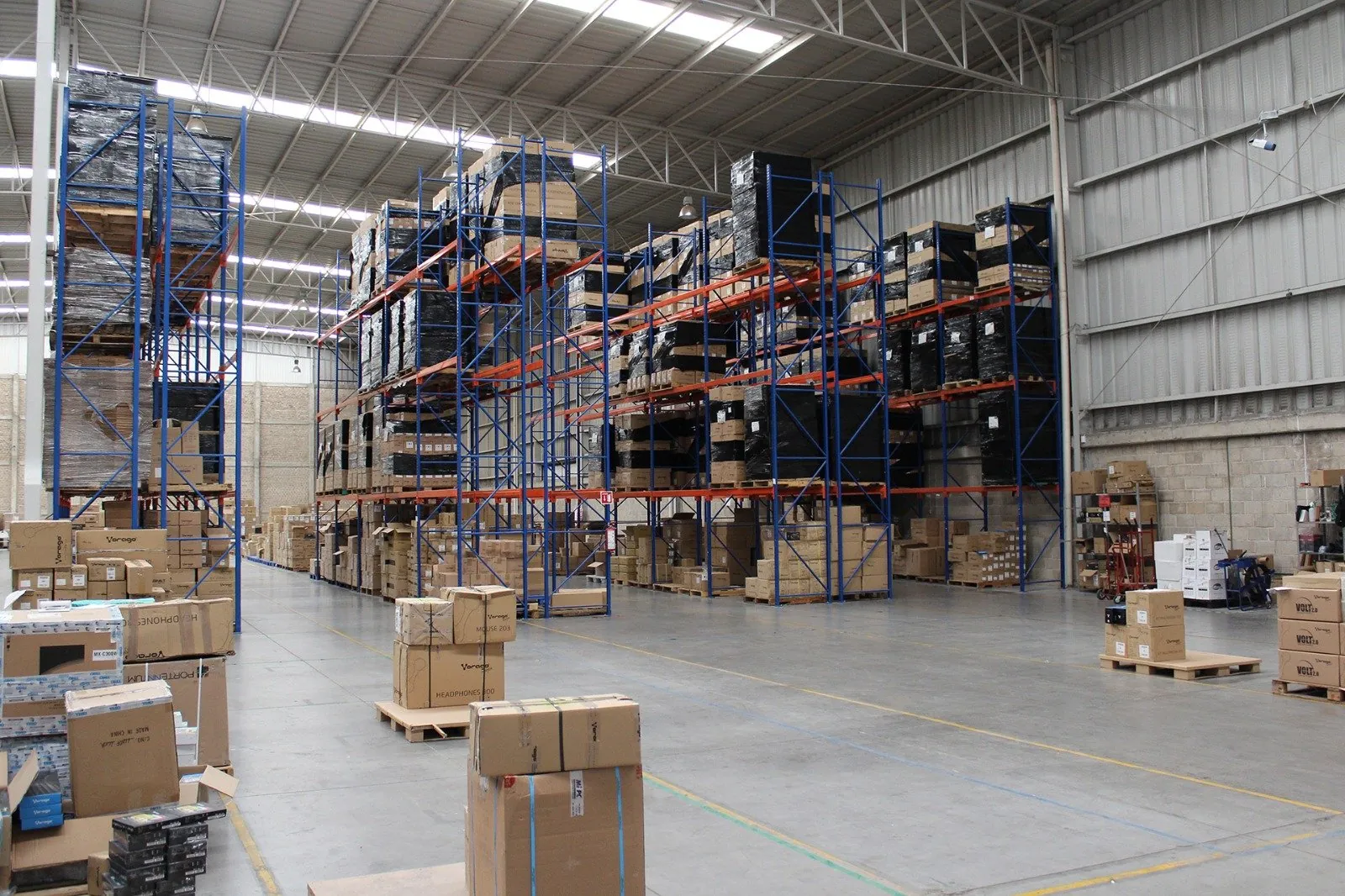
Inventory control for ecommerce: how to stop selling what you don’t have

Inventory control in ecommerce comes down to a single rule: the number in the system and the number on the rack must be the same. It’s achieved with three pieces: a central inventory feeding all your channels in real time, cycle counts that verify without stopping the operation, and SKU-level traceability for every movement in and out. When any piece is missing, the most expensive problem in ecommerce shows up: selling what you don’t have.
What is ghost inventory and what does it cost?
Ghost inventory is the gap between what your system says and what physically exists. It works in both directions, and both cost you:
- The system says it’s there and it isn’t: you sell, can’t fulfill and cancel. Every cancellation costs the sale, the negative review and a direct hit to your seller reputation.
- The system says it’s gone and it isn’t: paid-for product, sitting on the rack, that no channel can sell. A false stockout: frozen capital.
- On marketplaces, the punishment scales: Mercado Libre and Amazon track seller-caused cancellations; letting them pile up degrades your reputation and can end in suspended listings or a suspended account.
- The snowball effect: every uncorrected discrepancy contaminates your purchasing forecast: you restock what you don’t need and run out of what you do.
Cycle counts or an annual physical inventory?
The annual physical inventory —closing the warehouse for days to count everything— gives you an exact snapshot… that starts expiring the next day, and lets months pass between one truth and the next. Cycle counting works the other way around: every day a portion of the inventory is counted, without stopping the operation, so the whole catalog gets verified several times a year. The most efficient version is ABC counting: your fastest-moving SKUs —where a discrepancy hurts most— get counted more often, and the catalog’s tail less. For an ecommerce shipping daily, cycle counting isn’t optional: it’s the only way to catch the discrepancy when it’s one piece, not when it’s already fifty.
Multichannel: one stock pool for Mercado Libre, Amazon and your own store
Multichannel overselling almost always starts the same way: the same batch listed on several channels, each one deducting on its own, and a simultaneous sale the other channel never saw. The solution isn’t splitting inventory by channel —that freezes capital and creates artificial stockouts— but a central inventory that deducts every sale on the spot and updates availability across every channel. Two nuances: SKUs with few units left deserve a safety buffer to absorb simultaneous sales, and the inventory you put into the platforms’ fulfillment programs stays locked to that channel —we explain how each lock-in works in our guides on Mercado Envíos Full vs. external fulfillment and Amazon FBA vs. FBM—.
What does a WMS give you, and when is your spreadsheet no longer enough?
A WMS (warehouse management system) does what a spreadsheet can’t: it assigns a location to every SKU, adds and deducts inventory automatically with every movement, keeps a record of who moved what and when, and alerts you when a product hits its reorder point. Excel is enough while a single person controls a few SKUs in a single channel. The signs that it’s no longer enough are clear:
- You log movements by hand and "update later" (and later never quite arrives).
- You sell on more than one channel and sync stock by copy-pasting.
- More than one version of the file exists and nobody knows which one is right.
- Month-end closings bring discrepancies nobody can explain.
- You’ve already canceled orders for selling units that weren’t there.
How a 3PL solves it: inventory visible in real time
At a seriously run logistics operator, inventory control isn’t a pending task: it’s the warehouse’s operating system. Every shipment comes in through receiving and inspection, gets registered by SKU and put away in an assigned location; every pick deducts automatically; returns are restocked with a grading step instead of piling up; cycle counts run as a permanent process; and you see your inventory in real time, from wherever you are, with accuracy reported as a KPI —what range counts as healthy is covered in the 7 logistics KPIs you should demand from your operator—. You don’t have to build that muscle: you rent it already trained.
Does your system tell the truth? Test it
There’s a simple test: pick ten SKUs at random, count the physical units and compare them against your system. If discrepancies show up, your operation is already paying for ghost inventory —just spread across cancellations, stockouts and reconciliation hours—. A free operational diagnosis does exactly that, but with method: it measures your real accuracy, pinpoints where the discrepancies are born and tells you what you’d recover with serious inventory control. Tell us about your operation and we’ll review it with numbers.
Ready to find out if a 3PL is right for you?
Tell us about your operation and we’ll deliver a free assessment with real numbers for your case.
Request a quote