How much warehouse space do I need: calculating it in pallets
This is the question that stalls most quotes: nobody knows how much space they need until someone works it out for them. The good news is the math is simple and you can do it yourself in ten minutes, before talking to any operator.
The unit is not square meters, it is pallets
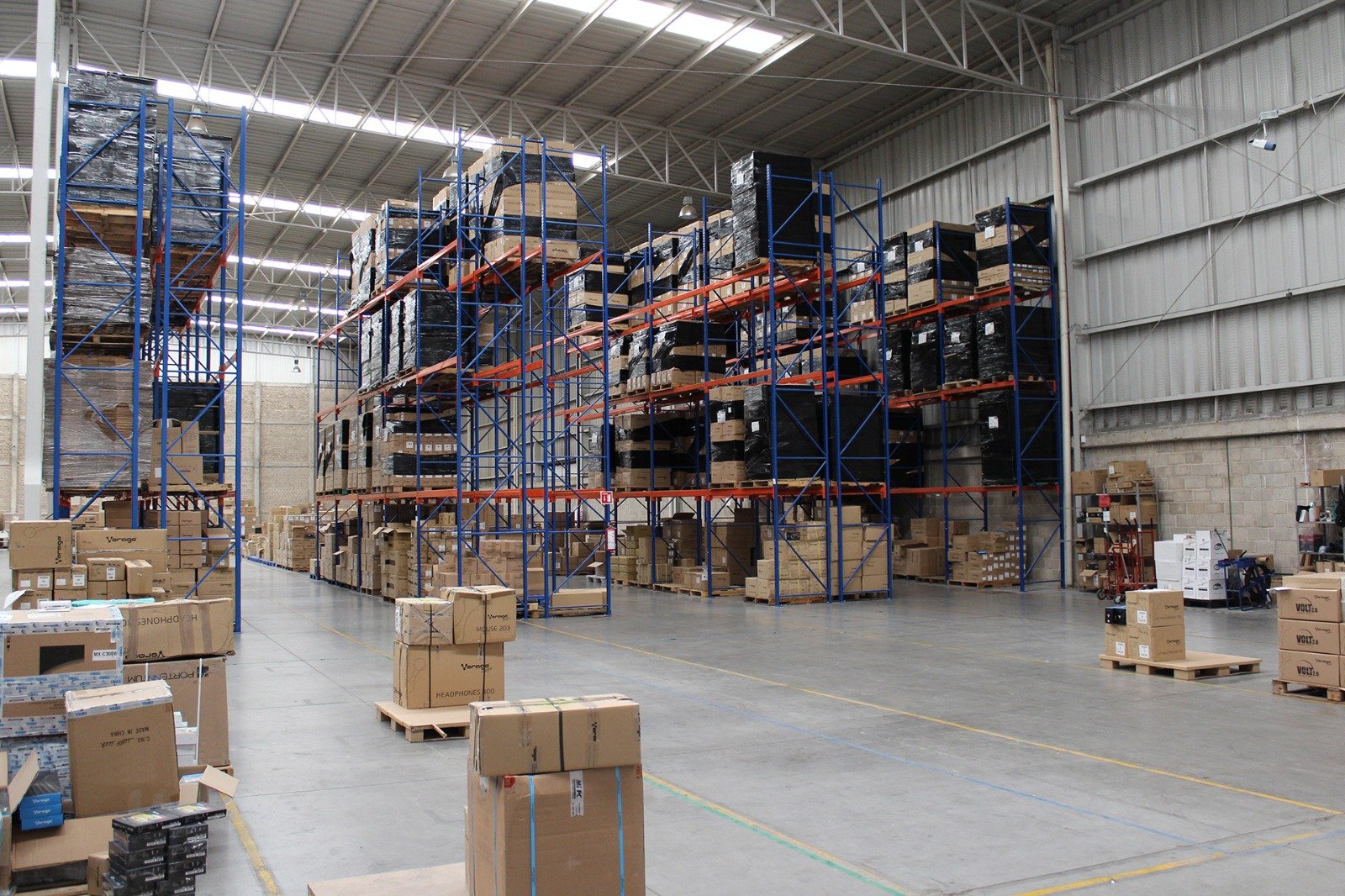
Warehouses rarely quote by square meter, because space is used vertically. The real unit is the pallet position. A standard pallet measures 1.2 meters long by 1.0 meter wide, and what can be stacked on it usually reaches 1.5 meters high.
Think of it as a box measuring 1.2 × 1.0 × 1.5 meters. Anything that fits in there is one pallet. If your product does not fit those dimensions, it is a special case to review separately.
Step 1: how many boxes fit on a pallet
You need the dimensions of your master carton, the one that arrives from your supplier. With that:
| Calculation | How to get it | Example |
|---|---|---|
| Boxes per layer | How many fit across the 1.2 × 1.0 m surface. | 40 × 30 cm box → 10 per layer. |
| Layers per pallet | Usable height (150 cm) divided by your box height. | 30 cm tall box → 5 layers. |
| Boxes per pallet | Boxes per layer × layers. | 10 × 5 = 50 boxes. |
| Units per pallet | Boxes per pallet × units per box. | 50 boxes × 12 units = 600 units. |
The example numbers are illustrative so you can see the mechanics; substitute your own box dimensions.
Step 2: how many pallets your inventory takes
Divide your average inventory by the units that fit on one pallet. Following the example: if you hold 6,000 units and 600 fit per pallet, you occupy 10 pallets.
Do this per product, not with a blended total. Two SKUs are not stacked on the same pallet unless you agree to it, because each has to be picked separately afterwards. That is the most common estimating mistake, and it usually lands at half the real space.
Step 3: the peak, not the average
Your inventory is not flat all year. If you sell hard during Buen Fin or Christmas, the month before you will hold double or triple the product waiting to ship. Size your heaviest month, not the average: that is what decides whether you fit.
This is where the billing model matters more than the rate. If you pay for fixed space all year, you are paying for your peak twelve months a year. If you pay per pallet occupied, your cost rises in October and drops in February along with your inventory. We compare both in running your own warehouse versus outsourcing.
What almost nobody accounts for
- Bulky, light product. You pay for space, not weight. A pallet of pillows costs the same as a pallet of screws, even weighing twenty times less.
- Turnover. If your product moves in and out fast, you may not need storage at all: it can be received, prepared and dispatched directly through cross-docking.
- Quarantined product. Returns and merchandise pending inspection also take up space.
- Growth. If you expect to double sales, ask what happens when you need twice the pallets: whether everything gets renegotiated or you simply occupy more.
What to bring to the quote
With four data points any serious operator can quote without guessing: master carton dimensions, units per box, average and peak-month inventory, and how many distinct SKUs you carry. If one is missing it can be estimated during the evaluation; what does not help is arriving with none of them.
The breakdown of the other cost lines is in how much fulfillment costs, and the questions worth asking an operator are in how to choose a 3PL.
Ready to find out if a 3PL is right for you?
Tell us about your operation and we’ll deliver a free assessment with real numbers for your case.
Request an operational diagnosis